
Get a Taste of East Africa!
Magnificent savannahs, stunning coastlines, vibrant cultures, and unforgettable wildlife encounters await you in Kenya and Zanzibar as you explore East Africa like never before. Journey through the heart of the African story with visits to powerful heritage sites, bustling markets, warm and welcoming communities, and breathtaking natural wonders.
In an effort to make your trip a streamlined process, Maximum Impact Travel offers extensive online trainings to help you prepare for your journey. Once you secure your deposit, you will be granted access to a series of on-demand courses designed to ensure you’re fully ready for your adventure. View these trainings at your convenience and step into East Africa with confidence.



Weather.
This trip crosses two very different climates. Nairobi sits at high altitude, so it is mild and can be cool, with cold early mornings on game drives even when afternoons are pleasant. Zanzibar is tropical, warm, and humid at sea level. By season: the August departure falls in Kenya’s cooler dry season and Zanzibar’s dry season, so expect crisp Nairobi mornings and warm, drier island days; the October departures are warmer, with a chance of short rains later in the month in Kenya and occasional showers in Zanzibar. Pack layers for cool Nairobi mornings and light, breathable clothing for the coast.
Hotel style.
You stay in two different properties. In Nairobi, a comfortable modern city hotel with amenities that typically include WiFi, a restaurant and bar, room service, a pool, a fitness center, and air conditioning. In Zanzibar, a beach or island property on the coast. Because the trip moves from the mainland to the island and back, you change hotels rather than staying in one place throughout.
Ground transportation.
Travel is by private vehicle, with a safari vehicle for the game drive on rough park tracks. Nairobi traffic can be heavy, so city transfers take longer than the distance suggests. On Zanzibar, transfers run on island roads that can be uneven.
Flights.
International airfare is not included; guests book their own flights into and out of Jomo Kenyatta International Airport (NBO) in Nairobi. The trip does include two internal flights, arranged for you: Nairobi to Zanzibar partway through, and Zanzibar back to Nairobi near the end. Both are cross-border flights between Kenya and Tanzania.
Visas, entry, and health (read this carefully; it is specific to this trip).
Because you leave Kenya for Zanzibar (Tanzania) and return, you cross borders twice and re-enter Kenya. Confirm the current requirements well before travel: Kenya requires an electronic travel authorization, and your entry must allow the return from Zanzibar; Tanzania requires a visa for Zanzibar. Passports should be valid for at least six months with blank pages. A yellow fever vaccination certificate is commonly required when entering Tanzania after time in Kenya, and malaria is a risk on the coast and in parts of Kenya. Requirements change, so guests should consult a travel health clinic and the official Kenya and Tanzania sources for the latest visa, vaccination, and antimalarial guidance before booking flights.
Optional excursions.
Zanzibar offers add-ons at your own cost, such as additional snorkeling or diving, a sunset dhow cruise, or extra beach time. Some Nairobi add-ons may be available on request. Availability is confirmed per departure.
Packing recommendations.
For safari, pack neutral-colored clothing (avoid bright colors and very dark blue or black, which can attract insects) and layers for cold early-morning game drives. For Zanzibar, pack light, breathable clothing, swimwear, and beach gear, with modest attire (shoulders and knees covered) for Stone Town. Bring high-SPF and reef-safe sunscreen, a hat and sunglasses, insect repellent, and comfortable closed-toe shoes for game drives and Stone Town, plus sandals for the beach. Add binoculars and a camera with a zoom lens for wildlife, a reusable water bottle, a UK-style Type G power adapter (both Kenya and Tanzania run on 230V), any personal medications, and printed copies of your passport, visas, and yellow fever certificate.
From packing tips to your peace of mind, here’s everything you need to know for a smooth journey through South Africa.

Minimal walking - mostly transfers and easy paced sightseeings.

Steady sightseeing pace, uneven surfaces and stairs possible.

Long days, early starts possible, extended activity windows.

Primarily flights/ transfers with limited walking.


This itinerary is subject to change based on local conditions, weather, site accessibility, and other factors beyond our control. Maximum Impact Travel reserves the right to modify the itinerary, substitute comparable accommodations or sites, and adjust timing as necessary to ensure safety and quality.

Your East African adventure begins the moment you land.
• Private transfer from Jomo Kenyatta International Airport, no taxis to sort out
• Settle in at your Nairobi hotel and take the afternoon to decompress
• Meet your tour team and get ready for the journey ahead
• Evening group gathering and tour briefing
Walking difficulty: Easy (airport transfer and hotel check in).
Average walking distance: minimal, under 1 km. Terrain: airport terminal and hotel, flat and paved.
Drive time: approximately 45 to 90 minutes from Jomo Kenyatta International Airport, subject to Nairobi traffic, which can be heavy.
Meals: breakfast included; dinner on your own.
Kindly note: highlights may vary and the itinerary is subject to change.
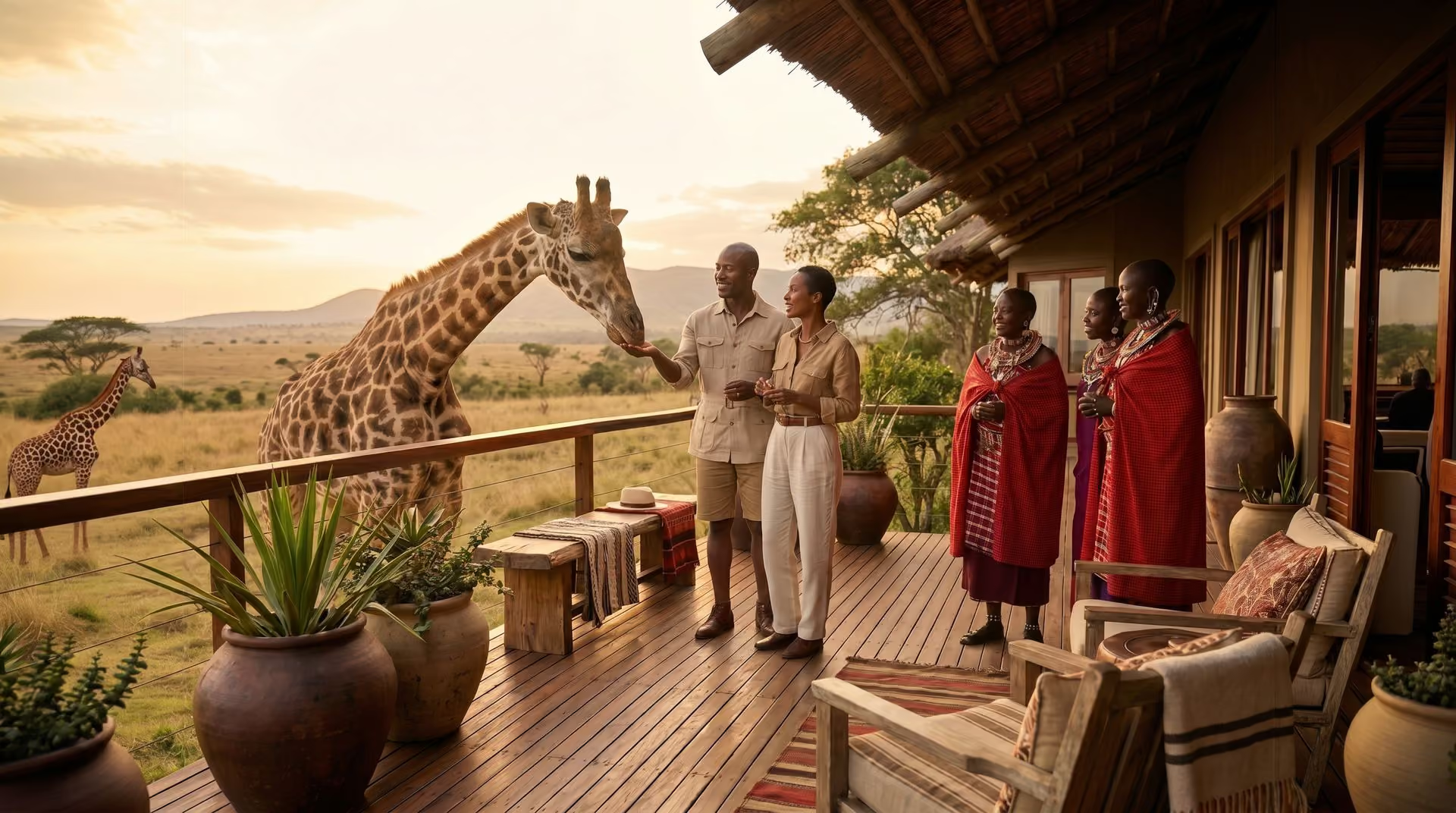
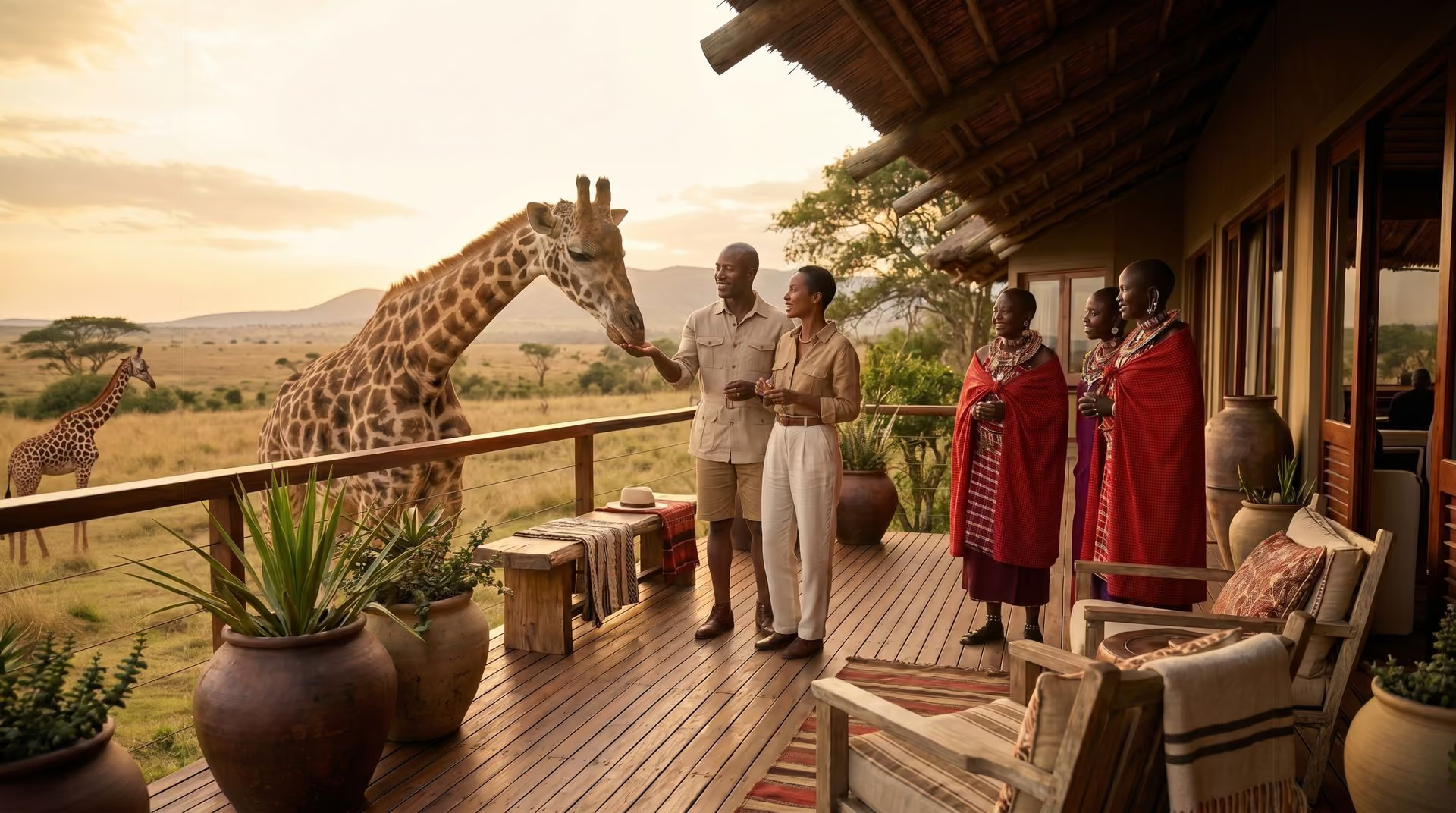
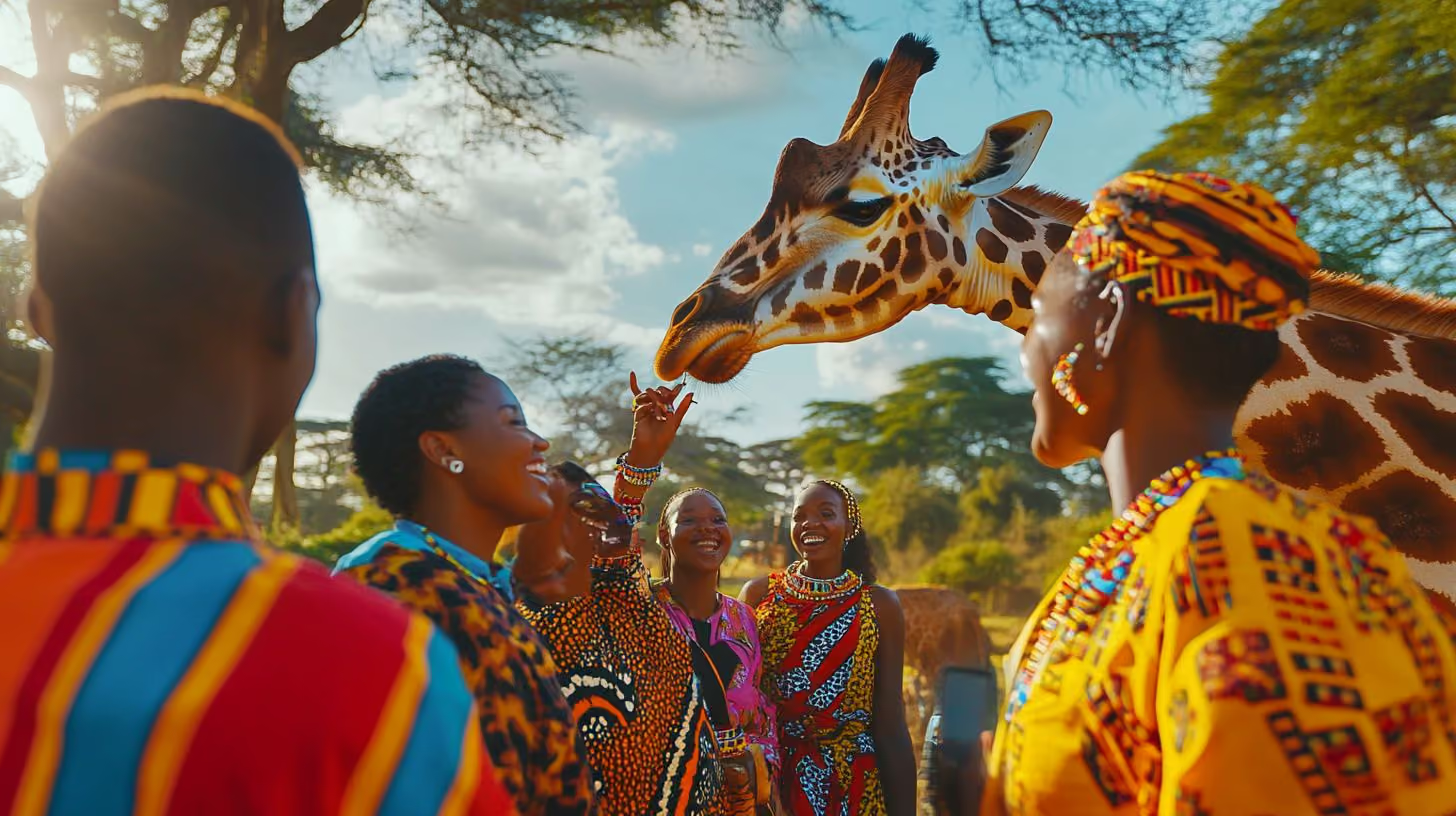
• Hand-feed endangered Rothschild giraffes at the Giraffe Centre
• A guided community visit to Kibera, led by someone who calls it home
• Bomas of Kenya, traditional dances and a living cultural village
Walking difficulty: Moderate (walking and standing across several sites).
Average walking distance: approximately 2 to 3 km across the day.
Terrain: a raised feeding platform at the Giraffe Centre, unpaved and uneven paths in Kibera, and cultural village grounds.
Drive time: short to moderate transfers around Nairobi, subject to traffic.
Note: the Kibera visit is a respectful, guided community experience.
Meals: breakfast included; lunch and dinner not included.
Kindly note: highlights may vary and the itinerary is subject to change.
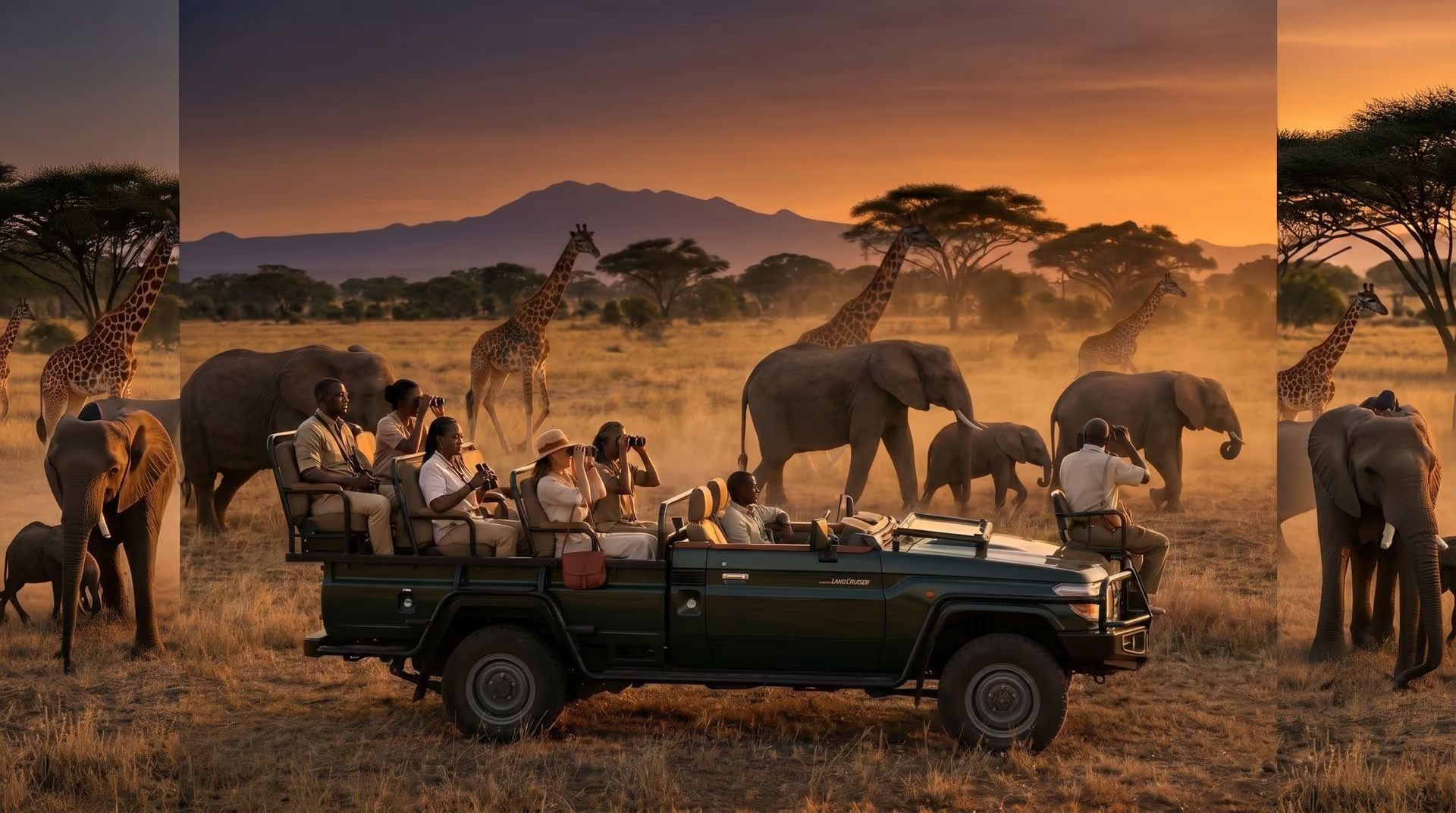
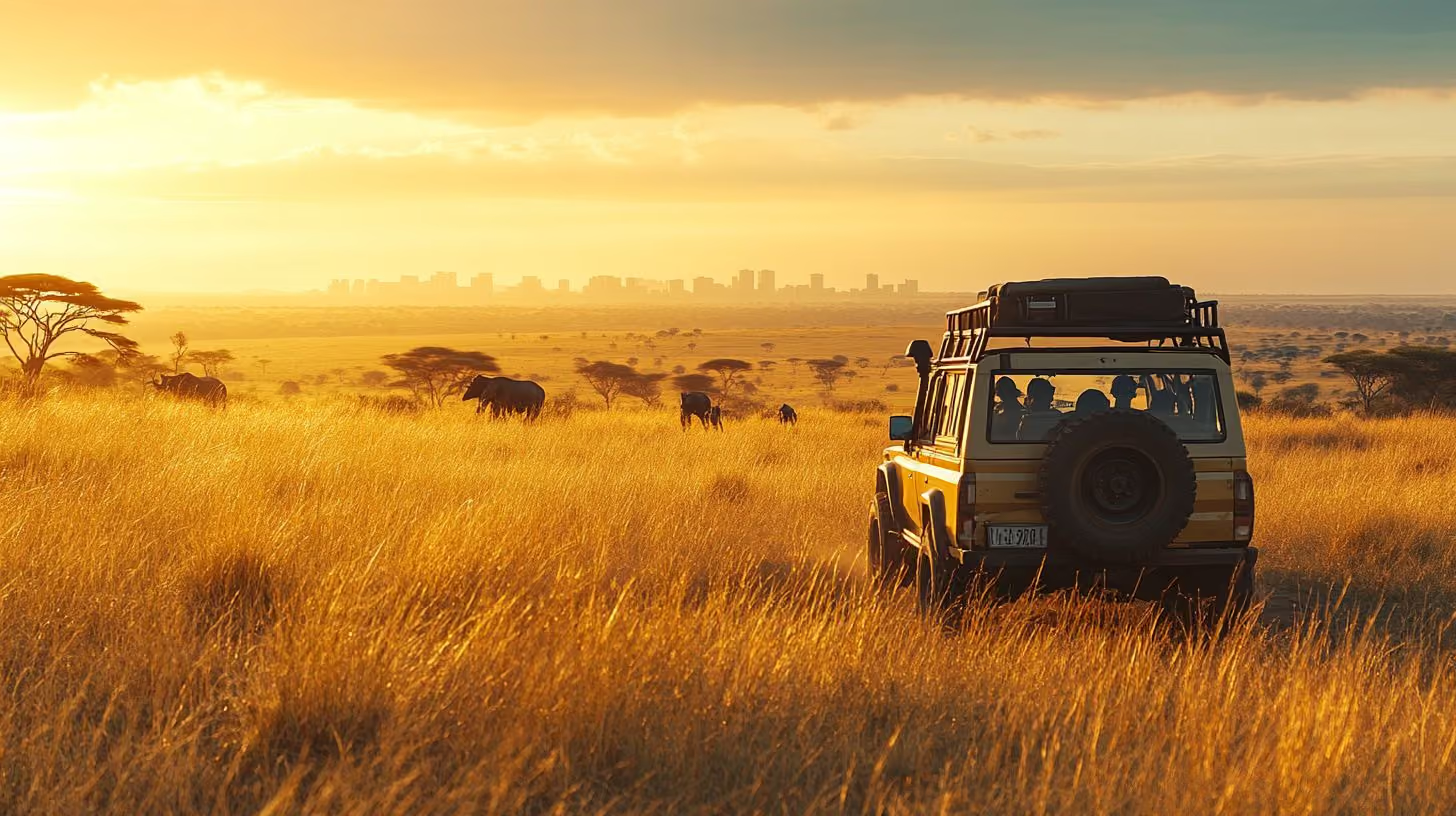
• A morning game drive in Nairobi National Park in search of its famous wildlife, with the chance to spot lions, rhinos, buffalo, giraffe, and zebra in their natural habitat
• When timing allows, a visit to a world-renowned elephant sanctuary where orphaned calves are given a second chance
• Nairobi National Museum, Kenya’s history, culture, and natural world
Walking difficulty: Easy to Moderate (much of the game drive is in the vehicle; walking and standing at the sanctuary and museum).
Average walking distance: approximately 1 to 2 km. Terrain: rough, dusty game-drive tracks taken in the vehicle; paved paths and grounds at the sanctuary and museum.
Drive time: game drive within Nairobi National Park, plus short transfers between stops.
Note: wildlife sightings on a game drive are never guaranteed, and the elephant sanctuary keeps a fixed daily viewing window, so that visit is subject to availability and schedule. Nairobi National Park does not have wild elephants; the elephants on this trip are the orphaned calves at the sanctuary.
Meals: breakfast included; lunch and dinner not included.
Kindly note: highlights may vary and the itinerary is subject to change.
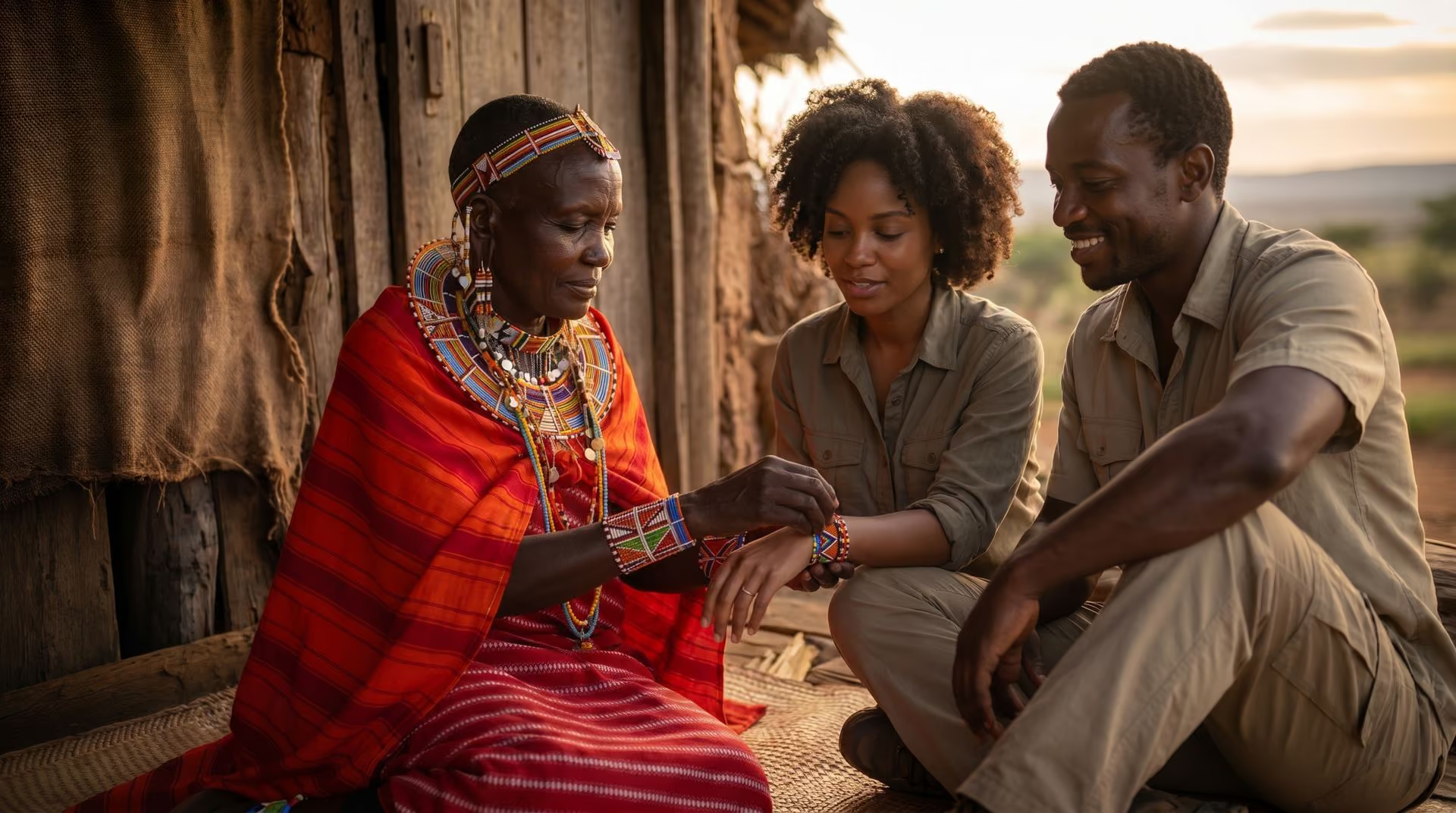
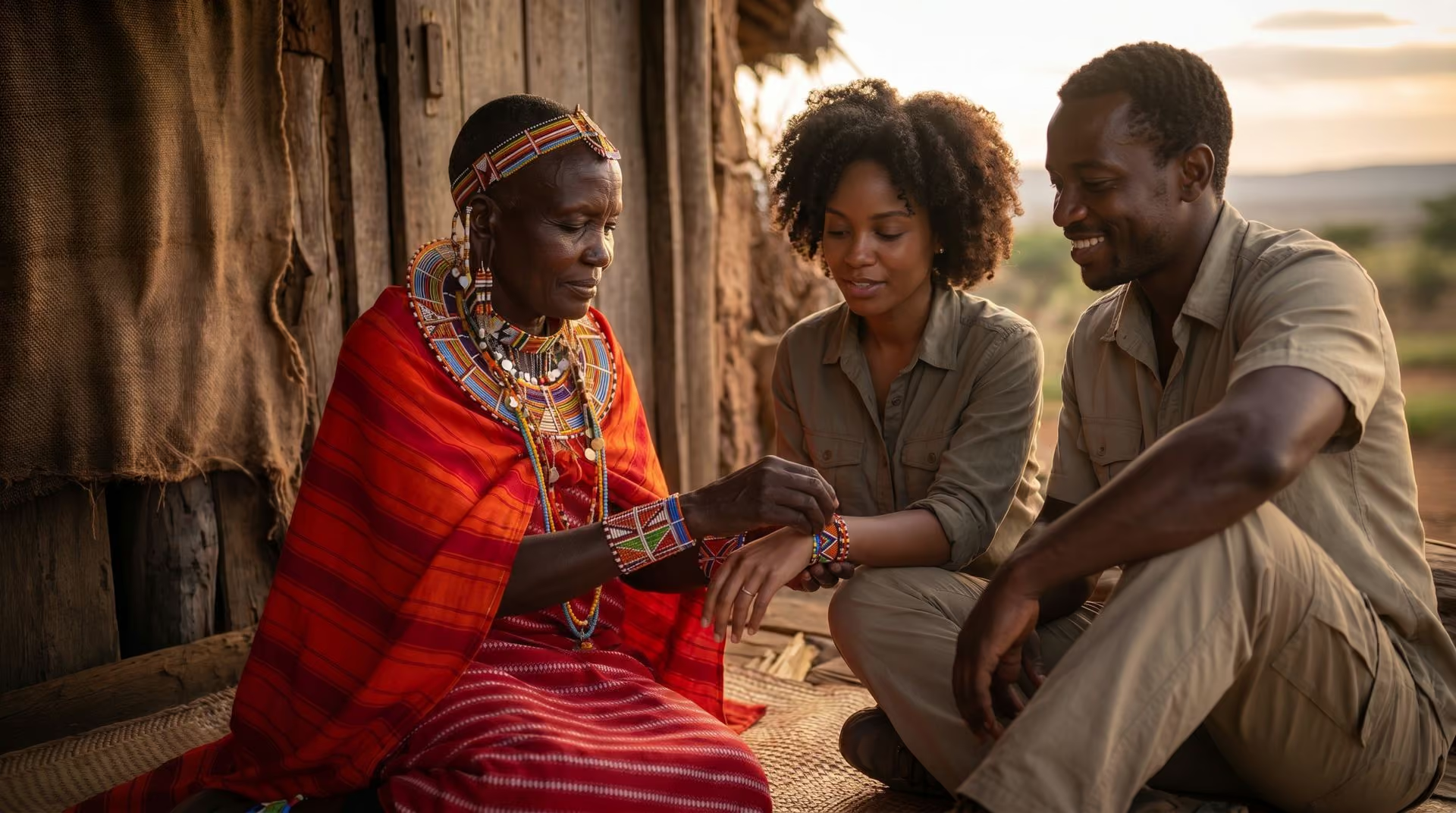
• Time with a Maasai family: beadwork, traditions, and a homecooked barbecue lunch over an open fire
• Meaningful conversation with elders and youth, connection rather than observation
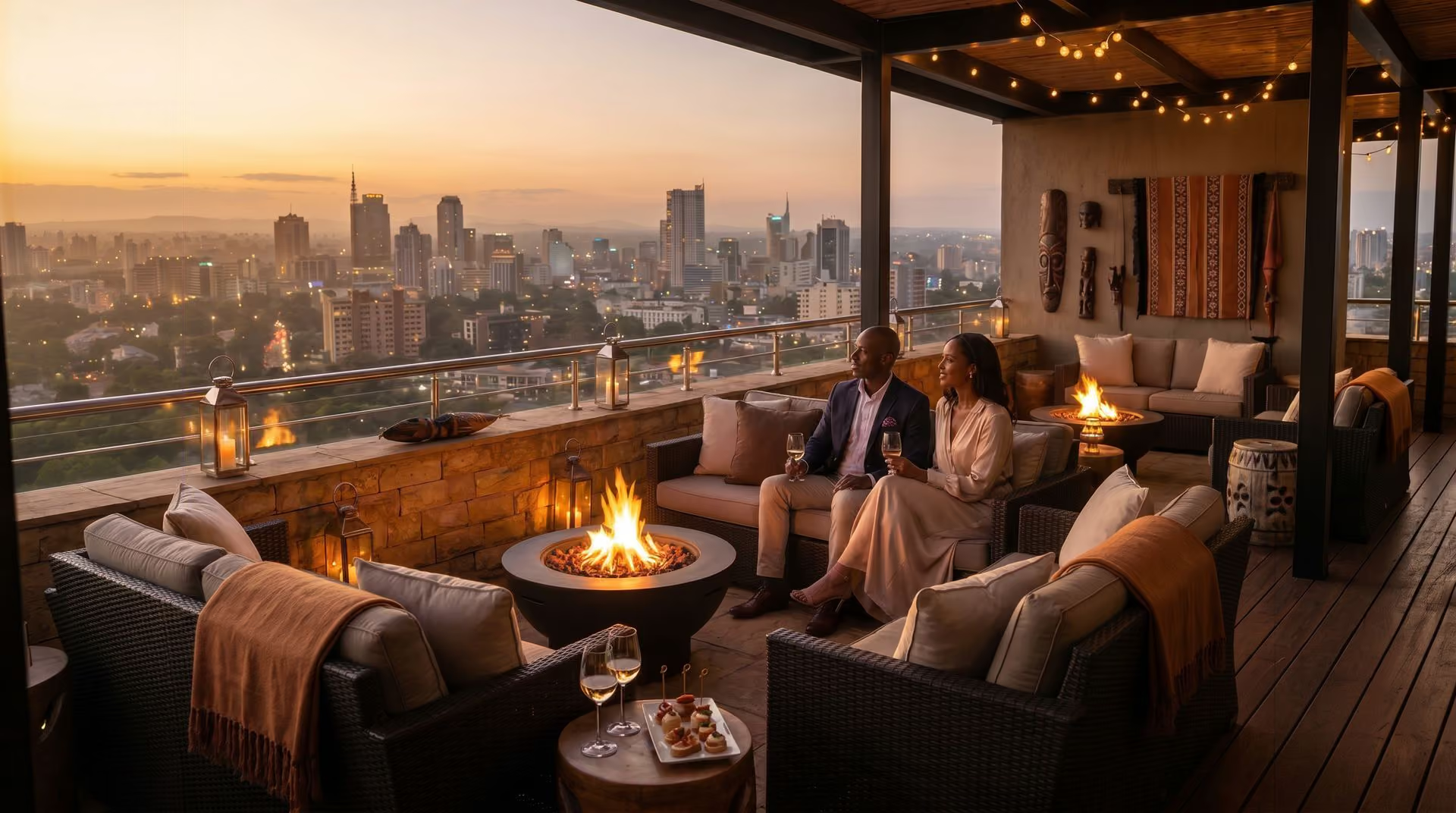
• KICC rooftop, 360-degree views over Nairobi at sunset
Walking difficulty: Easy to Moderate (walking on natural ground at the village,
standing).
Average walking distance: approximately 1 to 2 km.
Terrain: open, sometimes uneven natural ground at the village; a rooftop viewing deck in the city.
Drive time: transfer to the Maasai community and back, plus a city transfer, subject to traffic.
Meals: breakfast included; barbecue lunch at the Maasai village included; dinner not included.
Kindly note: highlights may vary and the itinerary is subject to change.

Trade the savannah for the Spice Islands.
• Included flight from Nairobi to Zanzibar, arranged for you
• Swap the plains for white-sand beaches and turquoise water
• Settle into your Zanzibar hotel and ease into island time
Walking difficulty: Easy (airport transfers and flight).
Average walking distance: minimal.
Terrain: airports and hotel, flat and paved.
Flight: an included flight from Nairobi to Zanzibar, roughly 1.5 to 2 hours plus airport time, arranged for you.
Note: this is a cross-border flight from Kenya into Tanzania, so a valid passport and Tanzania entry are required (see Know Before You Go for visas and health).
Meals: breakfast included; lunch and dinner not included.
Kindly note: the itinerary is subject to change.
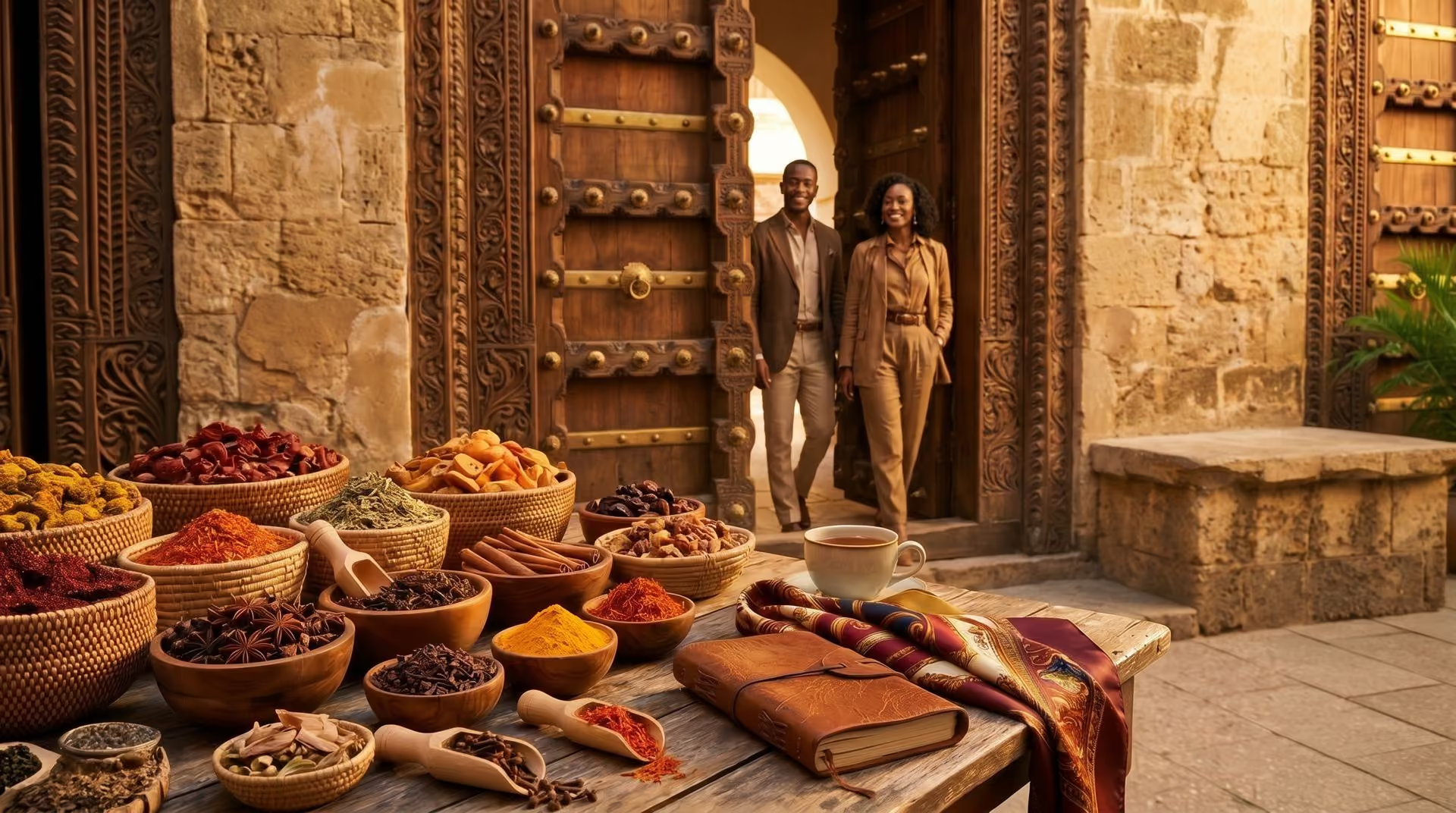
• Prison Island, where you can snorkel, relax on the sand, and meet giant tortoises
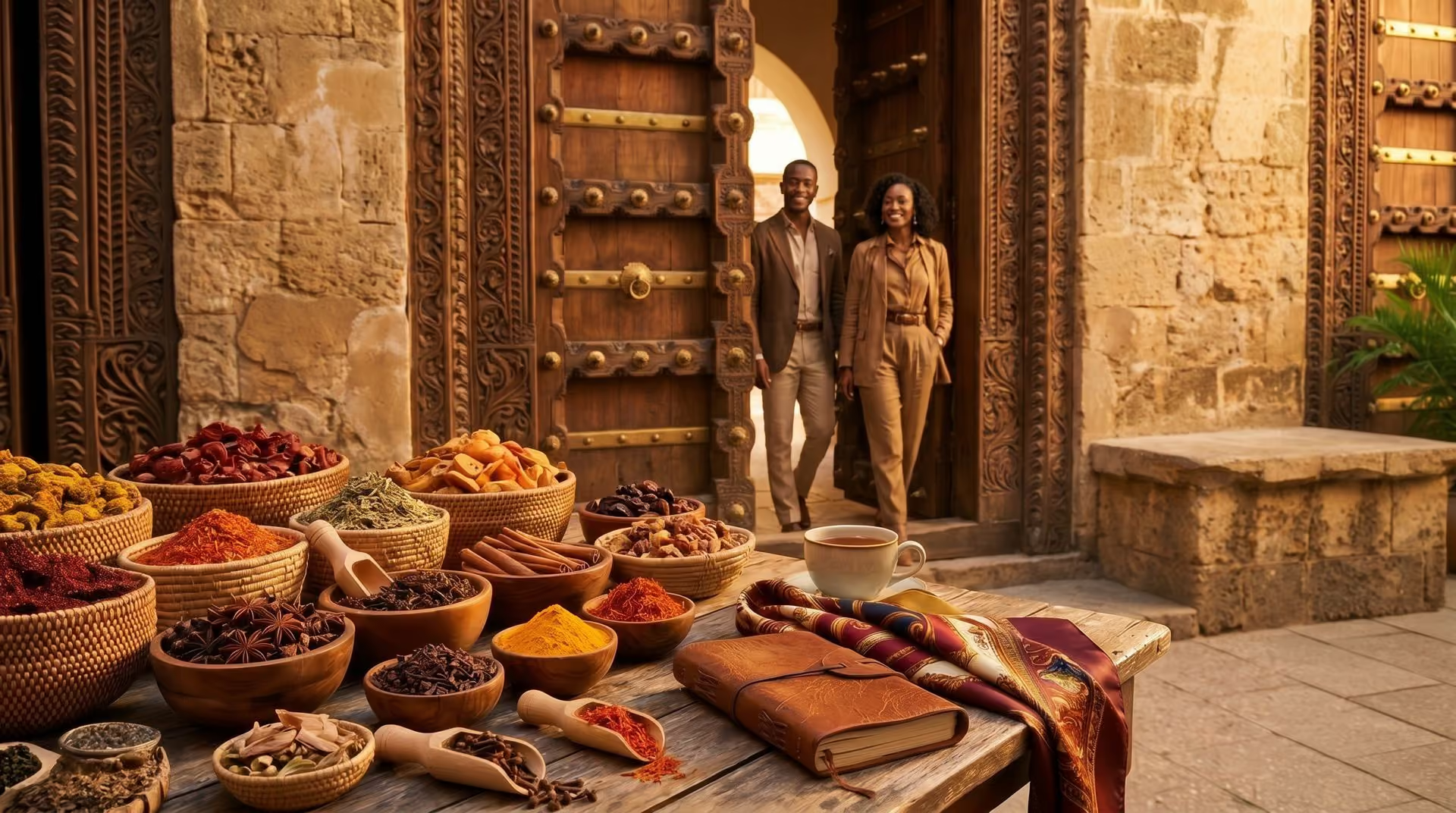
• Stone Town, a UNESCO World Heritage maze of coral-stone lanes and carved doors
• A spice tour through plantations of cloves, nutmeg, and cinnamon, to touch, smell, and
taste
Walking difficulty: Moderate (uneven lanes, a short boat transfer, walking through plantations).
Average walking distance: approximately 2 to 4 km across the stops.
Terrain: a boat to Prison Island, sandy beach, narrow and uneven Stone Town streets, and plantation paths. Getting around: a short boat transfer to Prison Island, a walking tour in Stone Town, and a drive to the spice farm.
Note: Stone Town is a predominantly Muslim community, so modest dress is appreciated; cover shoulders and knees. Meals: breakfast included; lunch and dinner not included.
Kindly note: highlights may vary and the itinerary is subject to change.
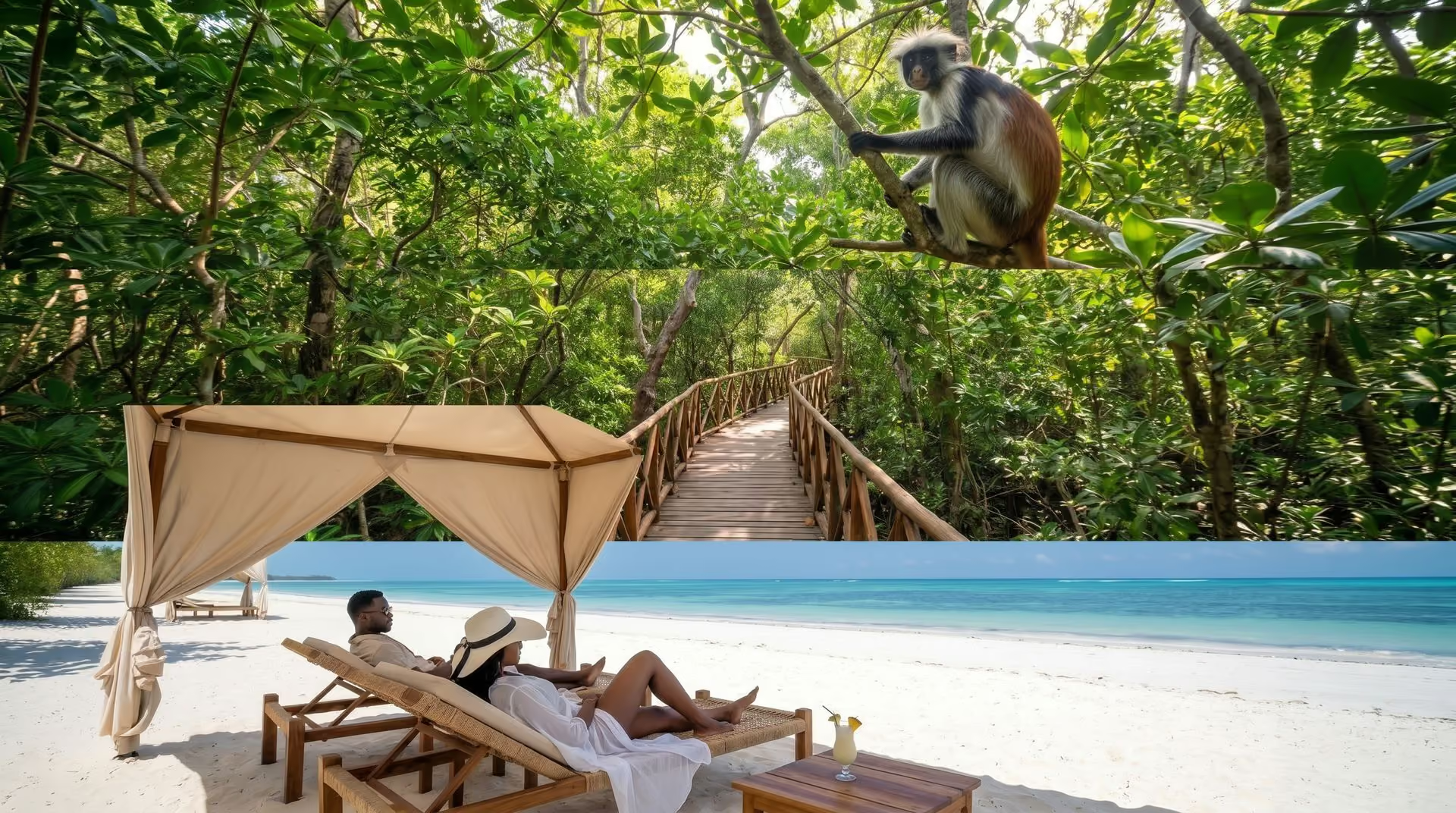
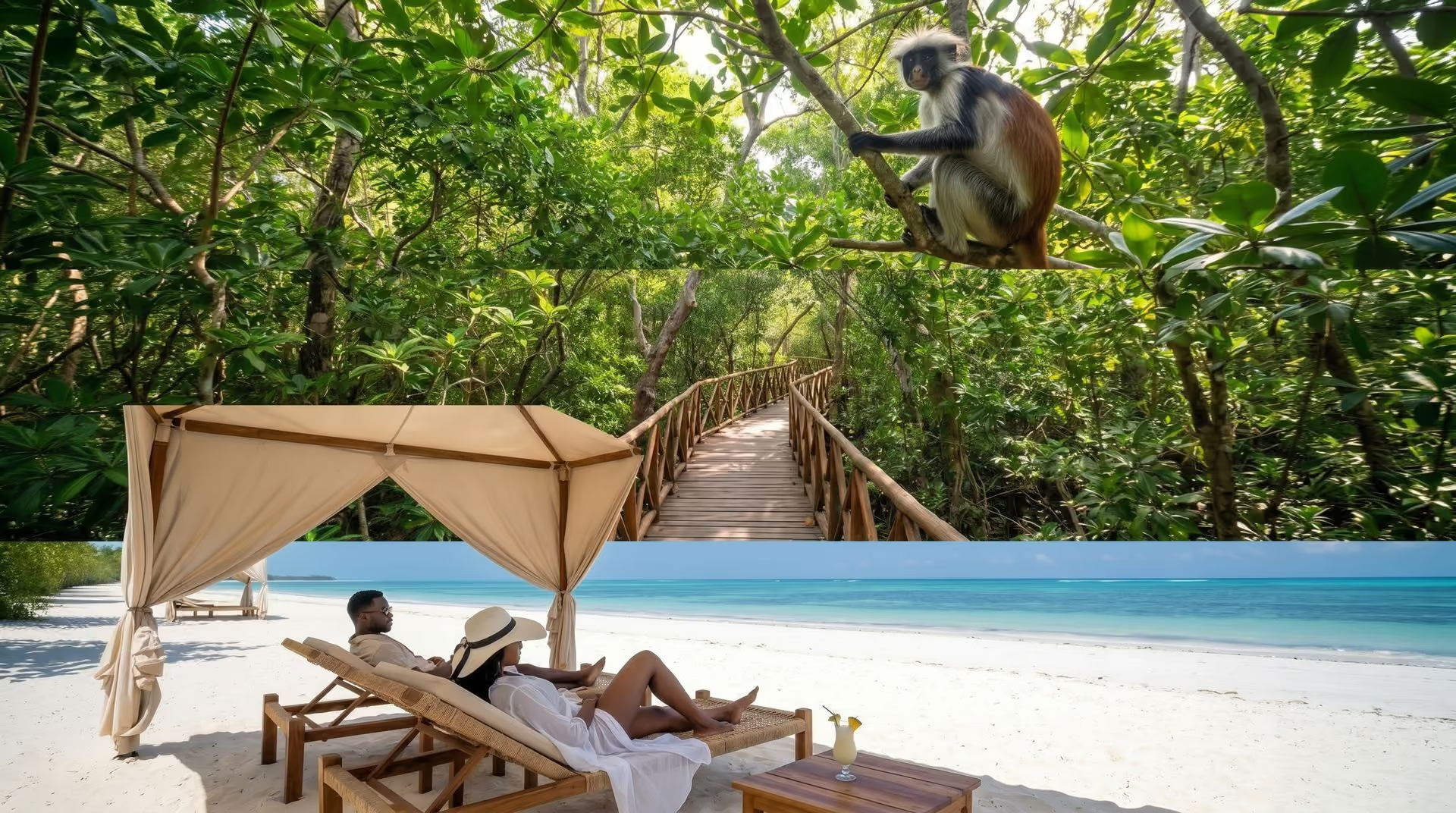
• Jozani Forest, home to the rare red colobus monkeys found nowhere else on Earth, plus a mangrove boardwalk
• Paje Beach, powdery white sand and turquoise water
• The rest of the day is yours
Walking difficulty: Easy to Moderate (shaded forest trails, a mangrove boardwalk, and soft sand).
Average walking distance: approximately 2 to 3 km.
Terrain: forest trails, a raised mangrove boardwalk, and soft beach sand.
Drive time: transfers to Jozani and Paje, subject to road conditions.
Note: reef-safe sunscreen is recommended to protect the marine environment.
Meals: breakfast included; lunch and dinner not included.
Kindly note: highlights may vary and the itinerary is subject to change.
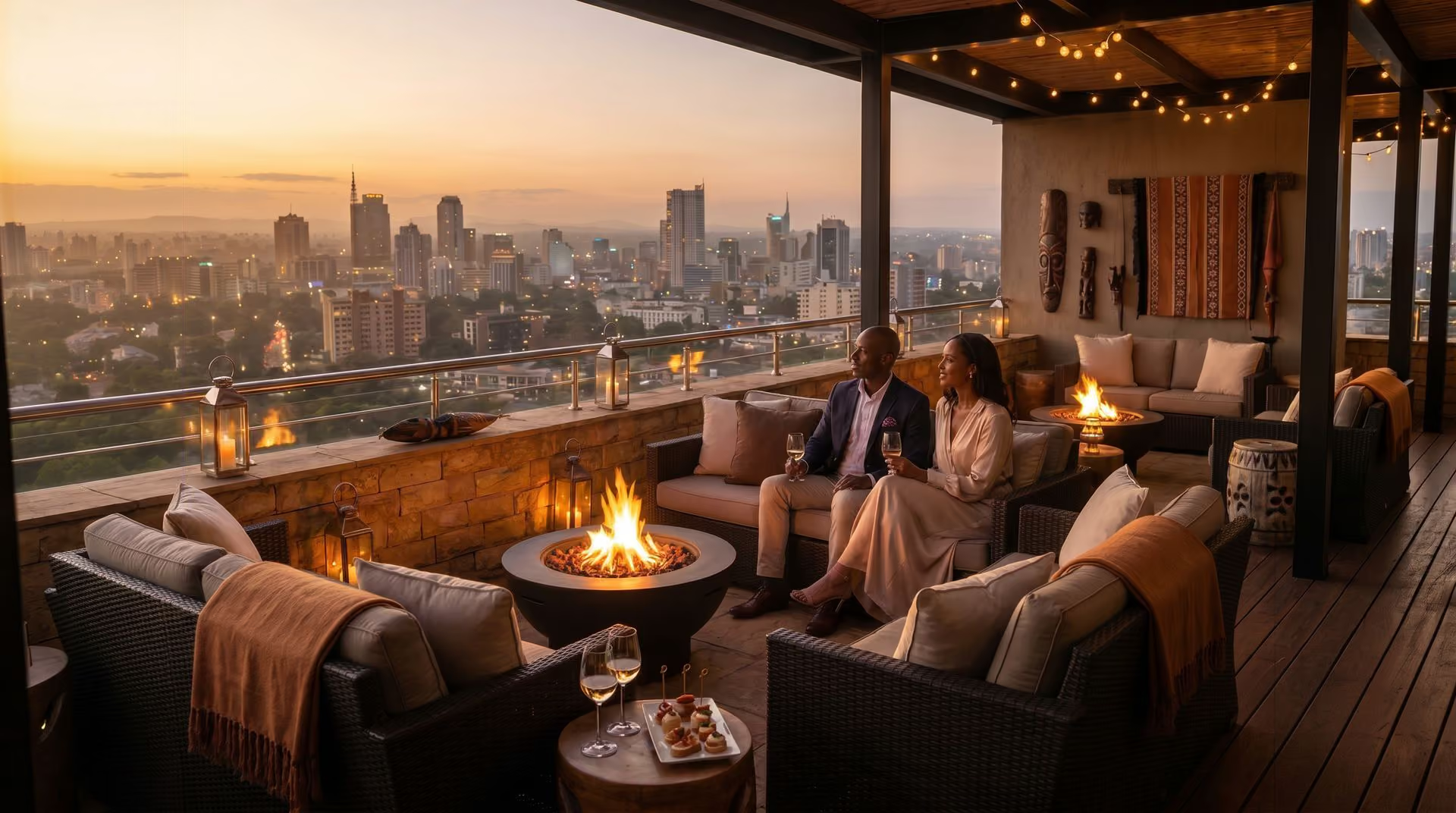
• Included flight from Zanzibar to Nairobi, arranged for you
• Time to relax and reflect on the journey
• A peaceful final evening in Nairobi
Walking difficulty: Easy (airport transfers and flight).
Average walking distance: minimal.
Terrain: airports and hotel, flat and paved.
Flight: an included flight from Zanzibar to Nairobi, roughly 1.5 to 2 hours plus airport time, arranged for you.
Note: this flight re-enters Kenya from Tanzania, so your Kenya entry must allow return; see the visa note in Know Before You Go.
Meals: breakfast included; lunch and dinner not included.
Kindly note: the itinerary is subject to change.

• Time to relax or pick up any last souvenirs
• Private transfer to Jomo Kenyatta International Airport
• Depart carrying East Africa with you, because there’s more waiting on your next Maximum Impact Travel® experience
Walking difficulty: Easy (optional last shopping and airport transfer).
Average walking distance: minimal, your choice.
Terrain: hotel and airport terminal, flat and paved.
Drive time: approximately 45 to 90 minutes to Jomo Kenyatta International Airport, subject to traffic.
Meals: breakfast included.
Kindly note: the itinerary is subject to change.


Trip deposists and payments are non-refundable. Therefore, it is prudent to protect your investment.
$153.70/month for 27 months.
For children ages 5 through 11 yrs old accompanied by an adult. If a child is below the age of 12 at the time of registration and reaches their 12th birthday before or during the trip, the child will not be eligible to participate in the child discount rate. Any child who has reached their 12th birthday by the start of the trip will have their account adjusted to reflect the accurate adult rate.
Children 0-4 yrs old at the time of the trip start date will be a flat free cost of $650 plus the cost of any meals, additional transportation, including but not limited to flights, ground, or sea transportation fees, whichever is greater, will be charged for each child under 5.
Please email us at info@maximumimpacttravel.com after booking the rest of your family and we will provide you with another link to book your child under 5.
All Sales Final - No Refunds
$253.70/month for 27 months.
This room is based on double occupancy, meaning it is shared with another person. If you do not have a roommate, are unable to find one 120 days before the tour starts, or if your roommate can no longer attend, your booking will automatically be switched to the single-occupancy room option and your account will be adjusted accordingly. We do not pair any participants within double occupancy accommodations.
All Sales Final - No Refunds
$301.85/month for 27 months.
Single Occupancy (Per Person)
Trip deposists and payments are non-refundable. Therefore, it is prudent to protect your investment.
Every destination tells a story. Every traveler adds another chapter.






A Passport is required by all foreign visitors and must be valid for six months after the intended length of stay. Please ensure that you have sufficient blank pages in your passport for entry stamps upon arrival. If there is in sufficient space in the passport then entry could be denied. Visa costs and requirements are specific to nationality and country of origin. It is imperative to check your visa requirements with the relevant embassies/consulates as they may vary according to your nationality.
Requirements and cost for visas can change with little notice. The official source for up-to-date visa requirements can be found by following the links below:
The official immigration website for Kenya: http://www.immigration.go.ke/
The official e-visa site for Kenya: http://www.evisa.go.ke/
Jomo Kenyatta International Airport: East Africa’s major flight hub is located 13km/8mi outside Nairobi and is the gateway to the Masai Mara, Amboseli, Mombasa and Kenya’s beaches as well as Zanzibar and Tanzania. There are also good connections from here to Uganda, Rwanda and the Seychelles.
Wilson Airport: a regional airport about 90 minutes by road from Jomo Kenyatta, Wilson is the hub for almost all of Kenya’s internal flights and serves its fly-in safari locations. Ensure you have time between your international flight and domestic flight to make the transfer between the two airports.
Moi Mombasa International Airport: located about 10km/6.2mi northwest of the town itself, Mombasa’s airport is the gateway to the Kenyan coast.
Chartered flights are a great way to get around Kenya and avoid the country’s often dirt roads; transfers from airstrips to lodges are conducted in 4X4 vehicles.
Road transfers from airports and between major destinations tend to use mini buses as do scheduled safaris to popular destinations such as the Masai Mara. Sliding windows and a pop-up roof provide passengers on mini buses with ample viewing opportunities on game drives whereas safaris to more remote destinations and private conservancies use open-sided 4X4s.
Check – in is 1hr prior for domestic departures and 2hrs prior for international departures. Due to particularly stringent security measures at airports in Kenya, guests are advised to arrive an additional hour prior to their departure time.
Of course NO! As per our Tour package Transfers to/from Airport to the Lodge’s are inclusive what you need to do is to share your full flight details with us so that we can arrange it accordingly.
Maximum Impact Travel will be providing hotel accommodation according to the itinerary program. The client’s whose will arrive earlier than the started safari dates or wish to extend their stay they will be required to pay for the extra cost.
Yellow Fever: If you are arriving in Kenya (or planning to re-enter) from a country where yellow fever is endemic (such as Sudan, Tanzania, Uganda or Zambia), you are required to have a yellow fever vaccination administered at least ten (10) days before your arrival (or re-entry) into Kenya. If your travel itinerary requires you to have a yellow fever vaccination, you must ask your doctor to provide you with an “International Certificate of Vaccination” which should be carried with you while traveling to serve as proof that you have fulfilled the vaccination requirement. If proof of vaccination is required and you do not carry it with you, you may be denied entry into Kenya. Please note that, even if you are not required to obtain a yellow fever vaccination for your tour in Kenya, we recommend vaccination if you are travelling outside of urban areas.
For more information about COVID-19 and other health issues in Kenya visits this link.
It is suggested that you bring a smaller traveler’s kit with remedies for minor stomach ailments or motion sickness risk. Anti-Malarial precautions are recommended when visiting Kenya. It is important that you check with a qualified health professional for the most current information concerning your travel itinerary and personal health history. In addition, other personal protective measures, such as the use of insect repellents, covering arms and legs after dusk and avoiding the use of scented products can help to reduce malaria risk.
Travelers with physical disabilities and those who require frequent or on-going medical attention should advise Maximum Impact Travel of their health situation at the time of booking (or at the time such a situation occurs should this be after the reservation is made).
Casual, comfortable clothing and muted colours are recommended (try to avoid black and blue) may attract Tsetse fly. It is certainly not necessary to bring a separate change of clothing for each day and evening, and it is recommended that you keep luggage to a minimum for your own comfort and ease of transport, especially if you are using light aircraft transfers. The most practical items to pack for safari are:
Kenya’s national currency is the Kenyan Shilling and although foreign currencies such as US Dollars are widely .Please note that due to the number of fake notes in circulation, no US Dollar bills printed before 2003 are accepted in Kenya and, in fact, your safest bet is to carry notes printed after 2006.
Banking facilities and ATMs are found throughout Kenya. Clients who wish to use their ATM card overseas should check with their own individual bank to verify whether the ATM card will be valid in a particular country.
All major credit cards are widely accepted on larger Cities in Kenya, Lodges and Hotels in particular Master card, Visa and American Express. But be aware of incurring high transaction fees. For peace of mind, we'd recommend purchasing a world currency card or cash passport card before you leave.
For Hotels in Cities Internet available to rooms and main area but remote hotels and Resorts especially in bush internet is limited and some WIFI available in main areas only while to others in rooms only.
220/240 Volts AC, 50Hz. It is possible that lodges in more remote areas inside National Parks do not have electricity and run on generator or solar power.
The national language in Kenya is Swahili, although English is widely spoken.
TIME ZONE: The time zone in Kenya is GMT +3 hours throughout the year.
Many travellers are surprised by the abundance, variety and quality of food served in Kenya. Most fruits and vegetables are grown locally. These include pineapple, papaya, mangoes, bananas, pears, strawberries, avocados, green beans and artichokes. A full breakfast is served on safari each day after you return from your morning game drive. For lunch, you may be served a hot meal or a buffet of cold salads and meats. Dinner on safari in Kenya may include anything from fresh and delicious local seafood to English roast beef or Molo lamb. These are followed by tempting desserts.
Avoid using tap water for drinking or brushing teeth. Most hotels, camps and lodges use boiled and filtered water or bottled water to make ice but if you have any concerns please ask the manager. Bottled water is provided in all properties and it is advisable to drink plenty of water to stay hydrated especially during the hot seasons.
Coastal areas of Kenya tend to be hotter and more humid than inland areas but this is always tempered by ocean breezes. North of Nairobi (in the highlands region around Mt. Kenya and Aberdare National Park) it becomes cooler as the altitude increases enough to warrant wearing a sweater in the evening all year around. During the months of June, July, and August, it can be cold in these areas, with temperatures as low as 35°F (1.5°C). The northern frontier district (extending from Samburu to Kenya's
northernmost borders) is an arid, desert-like region with slightly higher temperatures than the rest of the country. In the lower inland plateau areas (around Kisumu and Lake Victoria) temperatures are also warm and rainfall is spread fairly evenly throughout the year. While Kenya does not have distinct seasonal changes due to its proximity to the Equator, there are some subtle climatic variations at different times of the year.
December through March
These are the warmest months of the year (Kenya’s “summertime”). Temperatures do not often exceed 90°F or 32°C however morning and evening temperatures are refreshingly cool with low humidity.
April and May
This season is normally characterized by heavy, intermittent rains. Regions at a higher altitude experience lengthy rains that pour in the afternoons and evenings.
June, July and August
Kenya’s weather is coolest during these months, with lows in the upper 40’s F/ 4°C and highs in the low 70’s F/ 20’s C. At this time of year the country is refreshingly green.
September, October, and November
This is a delightful time to visit East Africa, comparable to springtime in North America and Europe. The days are warmer, with lows in the mid-50’s°F or mid-10’s°C and highs in the mid-70’s°F or mid-20’s°C. Short, scattered rains fall in November to freshen the country and lay the dust, although they can sometimes be heavy.
The Maasai Mara National Reserve in Kenya never disappoints. Whether you’re going on your first African safari or you’re a repeat visitor. The wide open plains are home to big herds of Gazelles and when you look closer, you’ll find lots of predators too. Big cats steal the show, but hyenas and jackals are never far off either. Every year from July through October, the Masai Mara becomes the backdrop of one of the most spectacular wildlife shows on earth – the Great Migration.
January – February:
This is the dry spell between the short and long rainy season, with only an incidental rain shower.
March – May:
This is the long rainy season with April being the wettest month. You don’t have to worry about it raining all day long, but it does rain regularly. Safari trails can get a little slippery. Early morning game drives are slightly now with average temperatures of 13 degrees Celsius (55 degrees Fahrenheit).
June – August:
The average daytime temperature is around 25 degrees Celsius (77 degrees Fahrenheit). Nighttime lows are around ten degrees Celsius and (50 degrees Fahrenheit). It’s generally sunny and dry, with only an incidental rain shower.
September – October:
This time of year you can expect occasional rain showers, but it’s mostly dry. Daytime temperatures in October are slightly higher at 27 degrees Celsius (81 degrees Fahrenheit). It can be slightly cooler after rain. Early morning game drives can be chilly at around twelve degrees Celsius (54 degrees Fahrenheit).
November – December:
This is the lighter of the two rainy seasons. Expect short rain showers during these two months. Average afternoon temperatures are approximately 27 degrees Celsius (81 degrees Fahrenheit).
Amboseli National Park is one of Kenya’s most popular parks. The name “Amboseli” comes from a Maasai word meaning “salty dust”;, and it is one of the best places in Africa to view large herds of elephants up close. Nature lovers can explore five different habitats here ranging from the dried-up bed of Lake Amboseli, wetlands with sulphur springs, the savannah and woodlands. They can also visit the local Maasai community who live around the park and experience their authentic culture.
In brief Temperature ranges from 20-30 c and rainfall from 200mm.Two rain seasons–March & April & short rain-Nov/December.
January:
January, the same as December, is a moderately hot summer month in Amboseli Kenya with temperature in the range of an average high of 27.8°C (82°F) and an average low of 16.7°C (62.1°F). In January, the average high-temperature is essentially the same as in December – a still warm 27.8°C (82°F).
February:
The last month of the summer, February, is also a moderately hot month in Amboseli, Kenya, with temperature in the range of an average low of 17.6°C (63.7°F) and an average high of 29.3°C (84.7°F). In February, the average high-temperature is essentially the same as in January – a still moderately hot 29.3°C (84.7°F).
March:
March the first month of the autumn in Amboseli, is also a moderately hot month, with an average temperature varying between 18.9°C (66°F) and 29.5°C (85.1°F). In Amboseli, the average high-temperature in March is almost the same as in February – a still moderately hot 29.5°C (85.1°F)
April:
April, like March, in Amboseli, Kenya, is a moderately hot autumn month, with an average temperature fluctuating between 18.3°C (64.9°F) and 28.3°C (82.9°F). In Amboseli, the average high-temperature in April is almost the same as in March – a still moderately hot 28.3°C (82.9°F)
May:
The last month of the autumn, May, is also a moderately hot month in Amboseli, Kenya, with an average temperature varying between 17.1°C (62.8°F) and 27.9°C (82.2°F). In May, the average high-temperature is practically the same as in April- a still warm 27.9°C (82.2°F).
June:
The first month of the winter, June, is also a moderately hot month in Amboseli, Kenya, with temperature in the range of an average high of 27.8°C (82°F) and an average low of 16.3°C (61.3°F). In Amboseli, the average high-temperature in June is almost the same as in May – a still warm 27.8°C (82°F).
July:
July, the same as June, is a moderately hot winter month in Amboseli, Kenya, with an average temperature ranging between max 27.5°C (81.5°F) and min 15.6°C (60.1°F). In July, the average high-temperature is relatively the same as in June – a still moderately hot 27.5°C (81.5°F).
August:
August, the last month of the winter in Amboseli, is also a moderately hot month, with an average temperature varying between 16.3°C (61.3°F) and 28.1°C (82.6°F). In Amboseli, the average high-temperature in August is practically the same as in July- a still moderately hot 28.1°C (82.6°F).
September:
September, the first month of the spring in Amboseli, is still a warm month, with an average temperature fluctuating between 29°C (84.2°F) and 16.8°C (62.2°F). In Amboseli, Kenya, the average high-temperature in September is essentially the same as in August- a still moderately hot 29°C (84.2°F)
October:
October, the same as September, is a moderately hot spring month in Ambosel, Kenya, with an average temperature varying between 29.6°C (85.3°F) and 18.1°C (64.6°F). October is the warmest month, with an average high-temperature of 29.6°C (85.3°F) and an average low-temperature of 18.1°C (64.6°F). The average heat index in October is estimated at a hot 33°C (91.4°F).
November:
The last month of the spring, November, is another warm month in Amboseli, Kenya, with an average temperature varying between 27.5°C (81.5°F) and 18.3°C (64.9°F). In Amboseli, Kenya, the average high-temperature in November is almost the same as in October – a still moderately hot 27.5°C (81.5°F).
December:
December, the first month of the summer in Amboseli, is still a warm month, with an average temperature ranging between max 26.6°C (79.9°F) and min 17.2°C (63°F). The coldest month is December, with an average high-temperature of 26.6°C (79.9°F) and an average low-temperature of 17.2°C (63°F)